
The short versionJudge an inspection system on what it produces after the detection — the record, the reason, the traceable link to a batch. Detection on its own is a demo.
What a shift of visual judgement is actually like
A human inspector makes several thousand visual judgements in a shift, quickly, against a standard that lives partly in a document and partly in their own experience. Inconsistency there is not a failure of diligence. It is what happens to any person asked to apply a fine-grained standard for eight hours.
This is the genuine case for computer vision on a line, and it is narrower than it is usually sold as. The model is tireless at the repetitive scanning. It is no good at deciding whether this particular scratch, on this particular part, for this particular customer, is a reject — and that is the decision the quality team is accountable for.
The model is better at looking than any person. It is far worse at knowing what the finding means.
What the governed part adds
InspectionAI is built around the reviewer rather than around the detector. In practice that means every finding carries the apparatus needed to act on it now and to defend the action later.
- Findings are classified against a shared defect library, so two reviewers on two shifts name the same thing the same way.
- A reviewer can accept, correct or escalate a finding, and correcting it is a first-class action rather than an override to be explained.
- Each decision is tied to its batch, line, vendor and process conditions — which is what makes a pattern visible before it becomes a customer return.
- Correction history accumulates into the training priority for the next revision of the model.
The boundary
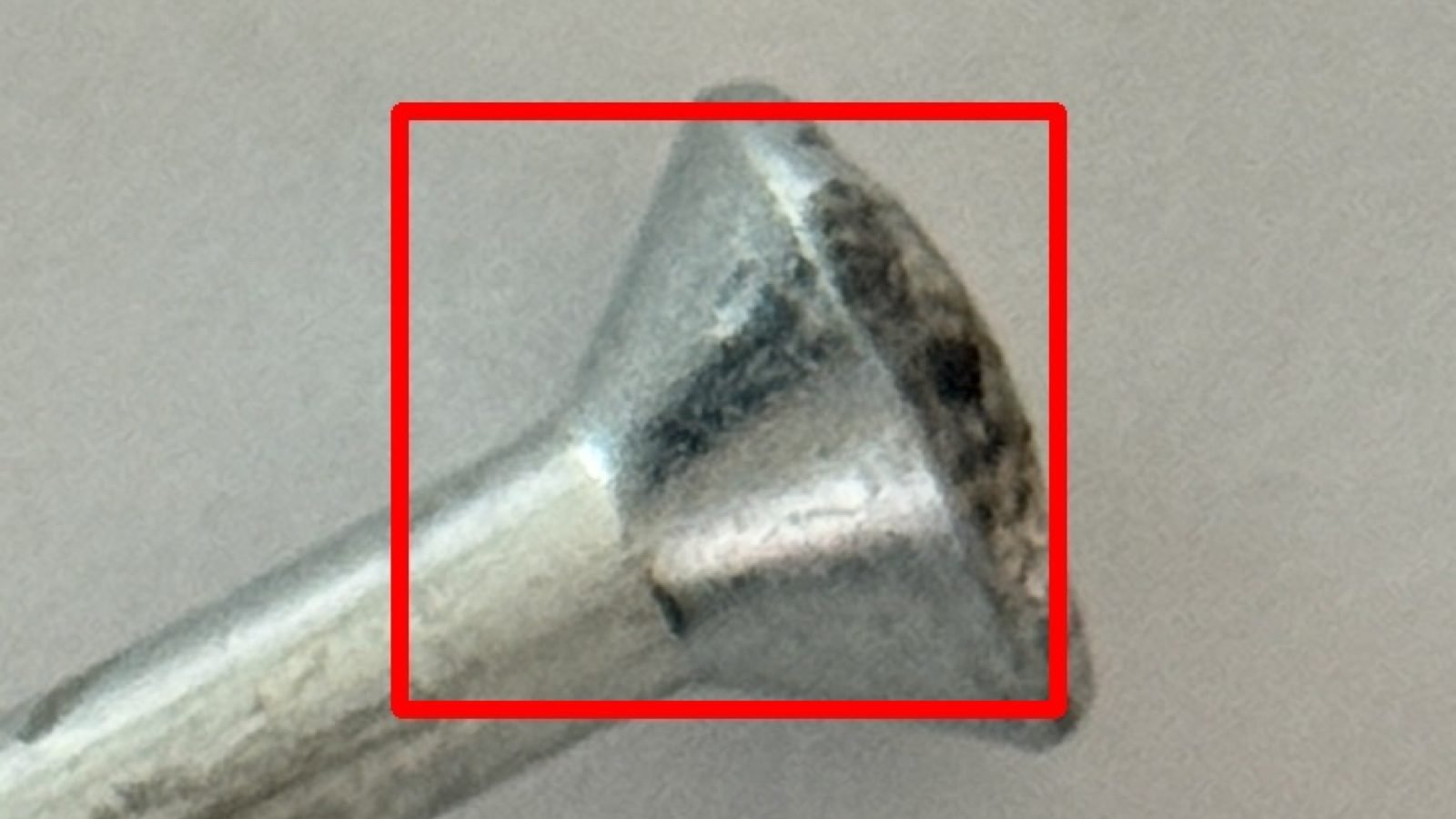
The example model behind our published output was trained on three defect classes: a scratch on the head, a scratch on the neck, and thread damage. It knows those three. It does not know your parts, your lighting or your tolerances, and it has no useful opinion at all about a defect class nobody has shown it.
Which is why we do not publish an accuracy rate. Any figure we printed would have been measured on our parts under our lighting, and the only number that would mean anything to you is the one a pilot produces on yours.
Written about InspectionAI